
Not Every Segment Is Equal: Why Dubai’s Luxury Property Market Stands Apart in 2026
By Luxury Dubai Real Estate · April 2026 · 8 min read
Softer prices are coming to Dubai but not everywhere, and not in equal measure. A wave of new supply is reshaping how different segments of the market perform, and for investors in luxury villas, branded residences, and waterfront properties, the message from every credible analyst is the same: scarcity still commands a premium. The story in 2026 is not a market in retreat. It is a market in differentiation.
THE HEADLINES IN CONTEXT
A Market That Cannot Be Read as One Story
Dubai’s residential market recorded 47,996 sales transactions worth AED 176.7 billion in Q1 2026 a 5.5 per cent year-on-year increase in volume and a 23.4 per cent rise in value. By any measure, the market is not broken. What is shifting is the distribution of that strength.
Louis Harding, CEO of betterhomes, was direct on the point: the market should not be viewed as a single pricing story. Performance will depend heavily on segment-level supply and local market conditions. His message to buyers and sellers alike? “Rest assured there is still a market.”
What is changing is where that market is most concentrated and for investors in Dubai’s luxury tier, that concentration is an advantage, not a concern.
| 47,996 Sales Transactions Q1 2026 | AED 176.7B Total Value Q1 2026 | +23.4% Year-on-Year Value Growth | ~5% Upcoming Supply: Villas |
| “Even amidst broader regional developments, Dubai’s underlying demand drivers and institutional stability continue to support long-term real estate investment in well-located residential assets.” — Deepak Batra, Real Estate Developer |
THE SUPPLY PICTURE
84% Apartments. 11% Townhouses. 5% Villas.
The composition of Dubai’s incoming supply pipeline is the single most important data point for understanding where prices will hold and where they will soften. Of all upcoming residential supply, approximately 84% is apartments, around 11% is townhouses, and roughly 5% is villas.
Harding described this split as offering a bit of a crystal ball into how different parts of the market may perform. The logic is straightforward: segments with the heaviest supply face the most pricing pressure. Segments with constrained supply villas in particular carry a structural advantage.
Knight Frank’s forecasts reflect this reality precisely. The firm anticipates price rises of around 3% in the prime segment for 2026, while growth in the mainstream market is expected to average around 1%. Cushman & Wakefield Core similarly projects mid-single-digit appreciation of 5 to 8% in premium locations a deceleration from recent years, but appreciation nonetheless.
SEGMENT BY SEGMENT
Where Luxury Investors Stand
The divergence in 2026 is not subtle. Here is an honest breakdown of how each segment is positioned and why the luxury tier continues to offer the most defensible value proposition.
| Luxury Villas & Ultra-Prime MOST RESILIENT | Supply of genuine luxury villas in established communities stands at just ~5% of the pipeline. End-user demand, larger square footage, and scarcity of like-for-like product create a structural price floor. Knight Frank forecasts ~3% growth in the prime segment for 2026. Mild softening of 0–5% in isolated cases; stable to appreciating in genuinely scarce waterfront and Palm assets. |
| Branded Residences & Penthouses STRONG DEMAND | Global HNWI relocation to Dubai continues at pace, driving demand for curated, amenity-rich branded product. Limited supply in this sub-segment means pricing power remains firmly with sellers. Pre-launch and off-plan branded projects continue to attract record per-sq-ft bids. |
| Townhouses STABLE DEMAND | Townhouses are tied to what experts describe as the Dubai equivalent of the middle class coming through a structural, long-term demand driver. With roughly 11% of upcoming supply in this format, absorption is healthy and price support is strong in well-located communities. |
| Apartments (Mid-Market) MOST EXPOSED | With ~84% of upcoming supply being apartments, this segment faces the clearest pricing pressure. Buyers gain negotiating power in high-density locations. Well-connected units near metro lines and business hubs will outperform; outer-community stock with competing supply faces 10–18% correction risk over 12–18 months. |
| “The investor who understands supply dynamics does not fear a cooling market. They recognise it as the moment when the difference between a good asset and a great one becomes most visible.” — Luxury Dubai Real Estate · Market Intelligence |
THE LUXURY THESIS
Why Scarcity Wins in Every Market Cycle
There is a consistent principle that runs through every cycle in Dubai’s real estate history: genuine scarcity does not correct. It consolidates. The product that is simply not being built anymore to use Harding’s phrase does not compete with a flood of new apartments. It occupies an entirely different pricing universe.
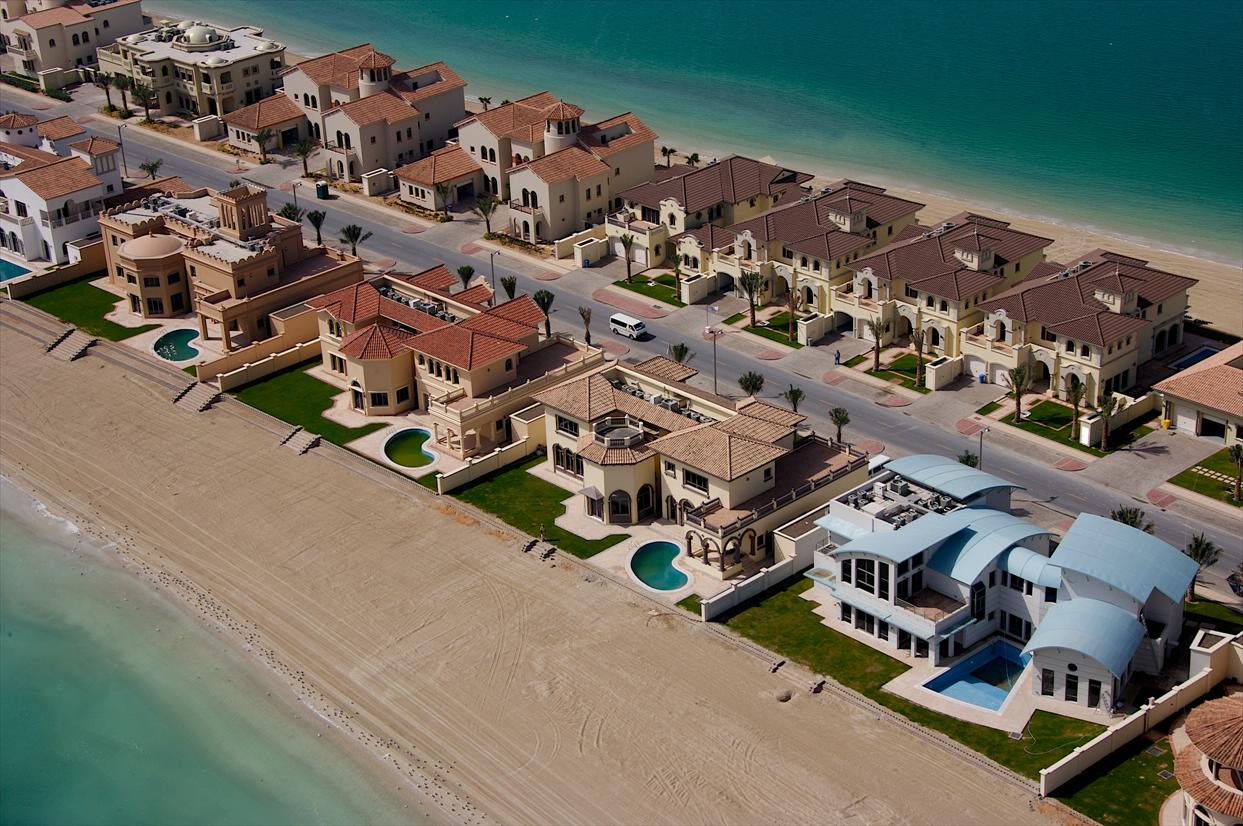
Luxury villas in mature communities with larger square footage and stronger owner equity carry the kind of intrinsic value that is immune to sentiment swings. Waterfront properties on the Palm, on Jumeirah Bay Island, and along Dubai Creek Harbour face no meaningful supply competition in 2026 or beyond. Branded residences where the asset carries the weight of an internationally recognised hospitality or design brand attract a buyer profile that is not shopping by price per square foot.
For this segment, a market correction in outer communities is not a threat. It is, if anything, a validation of the premium. When mid-market prices soften, the distance between a quality luxury asset and a commodity apartment widens and the luxury asset becomes relatively more attractive to the global capital that Dubai continues to draw.
| “Luxury villas, waterfront properties, and branded residences tend to be more resilient due to limited supply and high demand. In a cooling market, these are not the assets that soften first they are the ones that hold.” — Luxury Dubai Real Estate |
FOR SELLERS
Execution Is Everything
For those considering bringing a luxury asset to market in 2026, Harding’s guidance carries equal weight: focus less on the timing of external events and more on execution. Choose very wisely who you use. Not all brokers and brokerages are the same.
In a differentiating market, presentation, positioning, and access to the right buyer pool matter more than they do in a rising tide. The luxury segment demands a specialist approach one that understands the profile of buyers entering Dubai from Europe, Asia, and the Americas, and that can speak fluently to residency advantages, yield expectations, and lifestyle credentials alongside price.
The sellers who will achieve the strongest outcomes in 2026 are those who treat the market’s new nuance as an opportunity to distinguish their asset not a reason to delay.
THE BOTTOM LINE
Not a Retreat. A Reckoning.
Dubai’s property market in 2026 is not retreating. It is reckoning with the reality that five years of exceptional growth have produced a two-speed market one where well-located, scarce, luxury assets continue to hold and appreciate, and one where commoditised apartment stock faces the natural consequences of oversupply.
For investors who know where to look, that distinction is not a warning. It is an invitation. The luxury tier villas, branded residences, prime waterfront is precisely where Dubai’s market has always been most resilient, most investable, and most aligned with the ambitions of the global capital that continues to choose this city as its home.
TAKE THE NEXT STEP
Invest in Dubai’s Luxury Tier with Confidence
Our investment advisory team specialises in Dubai’s luxury segment villas, branded residences, and waterfront properties that hold value through every market cycle.
Explore Luxury Listings · Book a Consultation
Luxury Dubai Real Estate
© 2026 · All rights reserved · Market Intelligence Series