Unshakeable: Why Dubai’s Ultra-Luxury Property Market Defies Geopolitical Storms
From Dh90 million penthouses at Bluewaters to Dh41.9 million Palm Jumeirah villas mega-deals keep closing, global capital keeps flowing, and Dubai keeps proving it is the world’s most resilient luxury real estate market.
Published: April 2026 • Source: Khaleej Times / Whitewill • Category: Luxury Dubai Real Estate
When geopolitical tensions rise across a region, conventional wisdom says investors retreat to safety. They pull capital. They wait. They watch. But Dubai has rewritten that playbook entirely. As the wider Middle East has navigated heightened uncertainty through early 2026, the emirate’s ultra-luxury residential market has not just held firm it has continued to set records.
Dh40 million-plus transactions. Dh90 million penthouses. Trophy villas changing hands on Palm Jumeirah. International capital flowing in from Europe, Asia, and the CIS region. This is not a market bracing for a storm this is a market that has become the storm shelter itself.
New market intelligence from international real estate agency Whitewill, published in Khaleej Times, lays bare the extraordinary resilience of Dubai’s premium property segment and what is driving it forward in 2026.
| Dh138.7B Q1 2026 Transactions +21% year-on-year | 44,000+ Deals in Q1 2026 Off-plan: ~70% of activity | 6–8% Prime Rental Yields In key luxury communities | 4M+ Dubai’s Population Surpassed in 2025 |
The Deals That Tell the Story
Numbers capture scale, but individual transactions reveal sentiment. And in Q1 2026, the sentiment from the ultra-wealthy is unmistakable: Dubai’s finest properties are exactly where serious money wants to be.
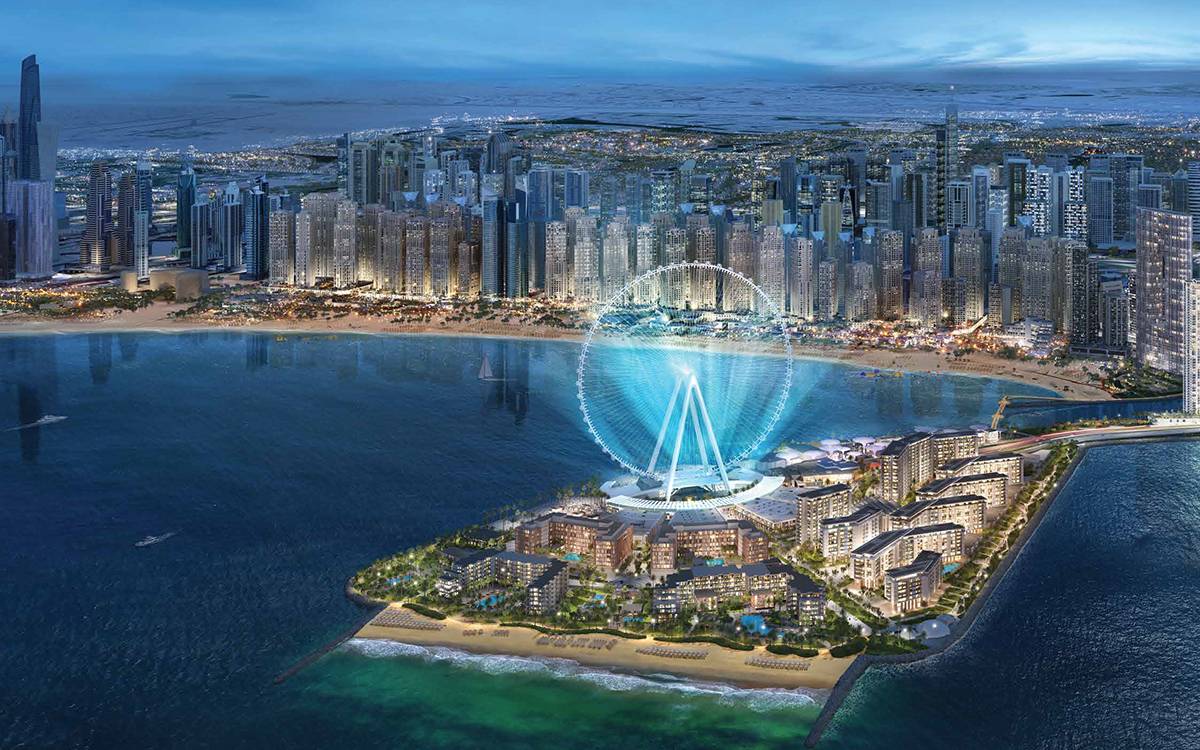
Among the headline transactions tracked by Whitewill was the sale of a Dh90 million duplex penthouse at Bluewaters Residence a breathtaking waterfront enclave adjacent to Ain Dubai and a constellation of world-class hospitality destinations. In a market where some analysts had expected geopolitical headwinds to cool appetite, a nine-figure deal tells a very different story.
Equally significant was the Dh41.9 million ultra-luxury villa transaction at Signature Mansions on Palm Jumeirah. Palm Jumeirah remains among the most coveted residential addresses on the planet characterised by extremely limited supply, iconic ocean frontage, and an investor base that spans continents. The fact that transactions at this price point are continuing without interruption speaks volumes about the depth and durability of demand.
These are not speculative flips or opportunistic trades. These are high-conviction, long-hold acquisitions by sophisticated investors who understand exactly what they are buying: scarcity, prestige, and an asset class that has consistently outperformed global peers.
Geopolitical Tension as a Catalyst, Not a Deterrent
The conventional narrative would frame regional tensions as a headwind for real estate. In Dubai’s case, the opposite dynamic is increasingly at play. Analysts quoted by Whitewill and Khaleej Times note that geopolitical uncertainty in the wider region has, in many instances, strengthened Dubai’s appeal among high-net-worth investors.
The reasoning is straightforward: when uncertainty grows elsewhere, capital seeks sanctuary. Dubai offers what few other markets can match a combination of political stability, transparent legal frameworks, residency-linked investment pathways, and an infrastructure that rivals any global financial centre. When regional dynamics become unpredictable, Dubai becomes the destination of choice for wealth preservation.
This safe-haven positioning is not accidental. It has been deliberately built over decades through consistent policy, world-class infrastructure investment, and a regulatory environment that prioritizes investor protection and market integrity. The result is a market that absorbs regional shocks rather than amplifying them.
The Anatomy of Dubai’s Luxury Demand
Understanding why Dubai’s ultra-luxury segment remains so robust requires looking at the structural forces underpinning it. These are not short-term catalysts they are deep, durable drivers of sustained demand.
- Population Growth: Dubai’s population surpassed four million residents in 2025, creating persistent underlying demand across all housing segments, from mid-market to ultra-prime.
- HNW Migration: The steady influx of high-net-worth individuals and global entrepreneurs continues to drive demand for branded residences and limited-supply beachfront assets.
- Residency Incentives: Investor-linked golden visas and long-term residency programmes are converting short-term speculative buyers into committed long-term owners, deepening market stability.
- Rental Yield Premium: Prime Dubai communities deliver rental yields of 6 to 8 per cent a figure that substantially outperforms equivalent assets in London, New York, Singapore, or Hong Kong.
- Supply Constraints: Ultra-luxury waterfront supply in Palm Jumeirah, Bluewaters, and Dubai Marina zones remains structurally constrained, ensuring that premium assets hold their value even in periods of wider market uncertainty.
Olga Pankina, Chief Operating Officer of Whitewill Dubai, captured the investor mindset precisely: buyers in the premium segment are increasingly prioritising quality assets with strong long-term value fundamentals. Legal security, trusted developers, and assets that can preserve value over time are the non-negotiables driving decision-making.
“In Dubai, we continue to see strong interest in liquid secondary stock and rare waterfront assets, while in Abu Dhabi, demand is more concentrated in branded, concept-led developments. Across both markets, clients prioritise legal security, trusted developers and assets that can preserve value over time.”
— Olga Pankina, COO, Whitewill Dubai
The Off-Plan Engine: Where the Volume Lives
While mega-deals dominate the headlines, the broader market architecture is equally impressive. Property transactions across Dubai reached approximately Dh138.7 billion across more than 44,000 deals in Q1 2026 alone reflecting year-on-year value growth of over 21 per cent.
Off-plan sales have continued to dominate activity, accounting for roughly 70 per cent of transactions. This is not a sign of speculative froth it reflects genuine confidence in developer delivery, long-term market direction, and the quality of master-planned communities now coming to market across Dubai and Abu Dhabi.
Prime waterfront communities have remained the most sought-after locations for international buyers, but new districts are also emerging. Areas benefiting from infrastructure investment and lifestyle-led master-planning are drawing capital from buyers who want to participate in Dubai’s next chapter of growth before the rest of the market catches up.
Abu Dhabi: The Capital Rises to Meet the Moment
The UAE’s luxury real estate story in 2026 is not limited to Dubai. Abu Dhabi is increasingly asserting itself as a complementary destination for discerning global investors, and Whitewill’s data reflects this growing momentum.
The agency reported strong early-phase demand for off-plan branded developments on Yas Island, with villas and larger residential units priced between Dh3 million and Dh7 million attracting both investors and end-users. The Manchester City Yas Residences project generated more than Dh30 million in early sales a clear signal that lifestyle-led, brand-anchored developments resonate powerfully with a globally mobile buyer profile.
Across Abu Dhabi, off-plan supply is playing a central role in shaping demand patterns, particularly in master-planned waterfront districts and integrated leisure communities targeting long-term owner-occupiers. As Sobha Realty’s landmark Dh40 billion Sobha City development in Al Bahia comes to market, Abu Dhabi is building the inventory to match its growing international stature.
What Smart Investors Are Doing Right Now
In any market cycle, the investors who generate the strongest long-term returns are those who act on fundamentals when others are hesitating. The fundamentals of Dubai’s luxury market in 2026 are compelling on every dimension:
- Demand structurally exceeds supply in ultra-prime waterfront locations
- Geopolitical uncertainty is channelling capital toward Dubai, not away from it
- Rental yields of 6 to 8 per cent offer income generation that global prime markets cannot match
- Population growth and HNW migration are creating consistent baseline demand
- Residency incentives are converting investors into long-term residents, deepening community stability and demand durability
- Branded and concept-driven developments are commanding premium pricing and attracting the world’s most sophisticated buyers
Market specialists cited by Khaleej Times and Whitewill expect demand for rare beachfront villas, branded residences, and secondary-market trophy apartments to remain robust throughout 2026, reinforcing Dubai’s position as one of the world’s fastest-growing luxury property markets.
The Verdict: Resilience Is the Strategy
Markets that merely survive uncertainty are resilient. Markets that actively benefit from it are extraordinary. Dubai’s ultra-luxury real estate sector is demonstrating that it belongs in the second, rarer category.
The Dh90 million penthouse. The Dh41.9 million Palm villa. The Dh138.7 billion in Q1 transactions. These are not anomalies they are the signature of a market that has matured into a true global asset class, one that sophisticated investors around the world now treat as an essential component of a properly diversified wealth portfolio.
If geopolitical uncertainty is what concerns you, Dubai is perhaps precisely the place you should be looking. Because the world’s smartest money already has.
Luxury Dubai Real Estate Insights • April 2026 • Source: Khaleej Times / Whitewill